Wednesday, September 24, 2008

And I'm off!


FINALLY!

Tomorrow, I have my final exam in Ulpan, and so tonight is going to be a long night of studying and packing. Neither of which I have started and it's already 10 pm. But it's okay!

Because I'm off to the land of the pharaohs!

I'll be gone for about a week before classes begin.


I'll try to find some random internet cafes while I'm there and keep you updated.

yeeeees!!!

Monday, September 22, 2008

Being "the other" and understanding the other "other"

edit: My computer froze last night (per usual) as I was writing this post:

What a strange day.

I'm so tired right now, but if I don't write this out tonight, I'll regret it come tomorrow morning.

So much has happened since the last time I've written...where do I even begin to begin?

For starters, I've just posted an article from Reuters about tonight's "attack" in Jerusalem-I'm trying to figure out why they've put quotes around the word, and I guess it's because no terrorist group was behind the act, and no civilians or victims were killed (yet). Only one casualty, and it was the driver of the vehicle.

The police claim it was indeed an act of terrorism, and I believe this is because terrorism is defined as an act of desperation to incite fear amongst civilians. I was driving back from an Ulpan graduation party at my teacher's house, and we were downtown right next to the Old City when this happened. All of a sudden we heard police and ambulance sirens closing in on the city, and we saw people running towards the scene. There were several different accounts of what had just happened; when we asked the people on the street, they said there were gunshots, while the radio announcer said it was another tractor/bulldozer incident by the Damascus Gate.

I was taken aback by how casually Israelis seemed to react to this incident. One Israeli I met simply said, "Welcome to Israel" and when I asked my Israeli friend if he'd heard what happened, he just sighed and said that things like this were a fact of life in Israel. And that was it. The "attack" hasn't been mentioned again since.

Last night, I went to a concert put on by an MTV-Fulbright scholar who brought together Palestinian and Israeli musicians along with a Palestinian and Israeli youth music group Heart of Jerusalem to perform at the Jerusalem YMCA. The first artists were from the group White Flag; the group is made up of 3 Palestinians from Gaza and 3 Israelis. Because sometimes (like last night) half the group from Gaza can't get through the checkpoints on time or ever, the group's self-proclaimed motto is, "the show must go on". They sang in both Hebrew and Arabic.

The hip-hop group G-Town that my internship researcher is focusing on also performed last night. They were good live, although I think they felt a little awkward at first because the crowd was quiet and seated-really not your typical hip-hop concert with a loud, excited crowd, arm waving, and head bobbing.

The crowd was mixed with mostly older parents there to watch their children perform in the youth group, younger Israeli groupie types of the band, the Sulhita project, and the G-Town posse dressed in western hip-hop gear with printed NY and LA wide-brimmed hats, baggy jeans, stylish Kanye hoodies and kicks.

After the concert, the other intern, the researcher and I went to go meet the members of G-Town, and I felt like such a groupie waiting for the group after the show! We hung out and talked with two of the members of G-Town in a nearby playground until late into the night.

It was a really interesting experience to hear first-hand a Palestinian's experience in Jerusalem. The members of the group live in the Shuafat Refugee Camp, which is actually just north of French Hill.

One of the members told us that he is studying film and television in a school in a nearby settlement. I asked him if that meant that most of his classmates were Israeli Jews, and he immediately responded that he didn't have a problem with Israelis or Jews, but he definitely affirmed that he did not like Israeli settlers. He told us how in class the Israelis never spoke with the Palestinians even though the classes are very small. He said that he doesn't even get acknowledged so much with a greeting or a smile.

I found out that there are separate schools for Jewish students and Palestinians students although there are a few schools like Hand-in-Hand that have both Israeli and Palestinian students and teach in both Hebrew and Arabic. Unfortunately, from the get-go, there is no intermixing. The children are segregated by the education system, and it seems that the approach to a peaceful coexistence is set up to fail.

Even in local Jerusalem parks, both Israeli Jews and Palestinian parents bring their children to play although the parents never talk to each other and the kids don't play with each other; they just share the same space.

This is when I realized that most of the people here cohabitate without coexisting.
There is only a feeble coexistence because in each own struggle to affirm the right to live, each must ignore "the other"'s right to live. The system is understood by many as a zero-sum game, and unfortunately someone has to lose.

We talked about the checkpoints and how tedious and humiliating they can be. Then he told us a story from his childhood when he was stuck with his family in the car at a checkpoint for several hours. When they finally got through, someone shot at the car, and the car with his whole family flipped over. They were all in the hospital for days. He doesn't know why the soldiers shot at his car. The bizarre thing is, he told us that until the age of fifteen, he had never met an Israeli who was not an IDF soldier with a gun. For most of his childhood, he confessed that he was afraid of Israelis, and this fear generates resentment, and that leads to hate.

It's interesting that from both sides, there are mutual constructs of "the other" that start from childhood. While Israeli Jewish children, especially those who grew up during the second intifada, imagine Palestinians as terrorists, Palestinian children imagine Israelis as intimidating soldiers with guns.

Both imagine the other as a violent oppressor.


Then, in another interesting turn of events, I went to the settlement of Efrat tonight to my Ulpan teacher's house with the rest of my Ulpan class to celebrate the end of summer Ulpan. I was in the Muslim quarter all afternoon buying Turkish delight and trying Knafeh while trying to find a way into al-Aqsa Mosque and the Dome of the Rock (unsuccessful).

I ended up walking to the central bus station with two friends, when I was stopped by a plainclothes policeman just between the Damascus gate and the Jaffa gate. He only stopped me. He aggressively told me to show him my passport. I was skeptical at first as to his identity as a policeman, but a nearby police vehicle with another policeman nodding along convinced me.

Obviously I don't carry such an important document with me everywhere, so I told him that I didn't have my passport in English. He started getting angry and told me that I was a tourist so therefore I must have a passport. I was flustered and so angry, but I managed to tell him in Hebrew that I was a student at the Hebrew University. As soon as he heard the Hebrew, he broke out into a smile and let me go as my friends watched. I was so humiliated again that I was the only one stopped because I was clearly not Jewish. I was so angry by his blatant discrimination. It made me so upset, and I couldn't understand how Palestinians could deal with this treatment on a daily basis. I thought, fuck this place. I would never send my children here.

The bus ride to Efrat was interesting. I saw the separation barrier up close, and the bus was built like a tank with small bulletproof windows to shield against snipers. I also noticed that the walls were not continuous, and a friend explained that this was so that if a driver is shot at while on the highway, he/she could stop behind the walled sections as protection from the sniper. What a life, huh?

Then, on the way back from dinner, the "attack" happened. And it made me re-evaluate my reaction earlier about discrimination. While nothing justifies rude treatment, I realize that here, discrimination equals survival. It certainly doesn't justify discrimination, but it is understandable.

How can they distinguish between the terrorist and the non-terrorist?

They have to do these random checks as humiliating and rude as they may seem to the person being checked. The checkpoints too are horrible, but an Israeli friend of mine who worked at a checkpoint in Gaza told me how they found bombs daily. How could they not have these tedious checkpoints when innocent people's lives were at stake?

I talked to my roommate after I got home, and I was pretty shaken up. I could still hear and see the sirens for a while outside my window. She told me that she had no sympathy for terrorists. She said that attacks on civilians were not justified by anything. If it were up to those individuals, they probably would change the system if they could.


I agree that most people would not condone maltreatment of others without just cause; however, the problem is, is defending against terrorism by a few radical individuals just cause for humiliation and discrimination against the whole group of people?
September 22, 2008

Jerusalem Driver Wounds 19 In "Attack": Police

Filed at 5:43 p.m. ET

JERUSALEM (Reuters) - A car slammed into a crowd in central Jerusalem late on Monday, injuring 19 people, nearly all of them Israeli soldiers, in what police described as a "terrorist" attack.

An Israeli soldier and then a policeman fired at the Arab driver, killing him, a police spokesman said.

The driver was still lying in the road an hour after being shot.

The incident came just three hours after Foreign Minister Tzipi Livni was handed the daunting task of forming a new government and revived memories of two previous attacks by Palestinians in vehicles in the city in the past few months.

Police spokesman Micky Rosenfeld said a number of soldiers had been standing on a pavement and were struck by the car as it careered into them -- deliberately in the view of witnesses.

Jerusalem police chief Aharon Franco said almost all the injured were soldiers. Two were seriously hurt, medics said.

The black car, its windows shattered, halted when it slammed into a Roman Catholic religious building opposite the walls of Jerusalem's Old City on a road that marks the dividing line between Arab East Jerusalem and the Jewish west.

Two of 19 people struck by the car were seriously injured, a spokesman for the Magen David Adom ambulance service said of the incident at Kikar Tzahal -- Israel Defence Forces Square.

"A man in a vehicle struck a number of people in Kikar Tzahal," police spokesman Rosenfeld said. "We can confirm it was a terror attack. The man was shot and killed."

The attack bore similarities to two previous incidents in Jerusalem this summer when Palestinians driving construction vehicles attacked Israelis. In July, a digger driver killed three people and wounded dozens, while more than a dozen people were wounded in a similar incident three weeks later.

(Editing by Tim Pearce)

http://www.nytimes.com/reuters/world/international-israel-palestinians-attack.html

Saturday, September 20, 2008

View from the top

If you know me well enough, you knew from my last post that I was going to be back at the Muslim quarter of the Old City the very next day. This time though, a friend and I walked to it from the dorms. It was a pretty long walk, but Jerusalem is cooling down a bit, and so even though the sun was still beating down ferociously from above, there was also an occasional cool breeze to mollify the heat.

I bought myself one of the three things I vowed to buy in the Middle East. I bought a 20 shekel Azan alarm clock!!

When I was in Morocco, I loved waking up, yes even at five in the morning, to the muezzin's call to prayer resonating from all corners of the city. After going back to the states, I realized that hearing the call to prayer was something that I really loved and really missed. I read somewhere later on that in all the brick-a-brack type stores in any Middle Eastern souk, one can find alarm clocks that wake you up with the call to prayer-I knew I would have to get AT LEAST one. I'll probably end up buying up a collection before I return home.

And there, in the souk of the Old City, I found several! There were Azan clocks that rang five times a day, and multi-colored Azan clocks, small ones, big ones, and all wonderful. I bought one that only rings once since I figure I won't be home enough to enjoy the other four.

(You can see my new Azan clock as the crowning photo of this blog. By the way, do you like the new layout?)

After some intense roaming around, gobbling down sticky honeyed Arabic desserts, drinking pomegranate juice, and haggling for random unnecessary purchases, we took a breather by the entrance to Al-Aqsa and the Dome of the Rock. We weren't allowed in because it's disrespectful to enter after a certain time especially during Ramadan, so we watched as huge crowds filed in. I have yet to visit the mosque and the dome, but I'd never found the entrance before-I'll get to them some day.


Also, today as I was taking my jog, I realized why I put myself through this painful run almost every day. To be honest, I really dislike running-I would much rather be taking a nap. But as I gazed out at the view overlooking Jerusalem, I realized this view reminded me everyday how lucky I am to be here. As much as I complain about things around here, I would not rather be anywhere else right now in my life.

And I'm sorry to be cliche, but it also made me realize just how unique Jerusalem is. On the one hand, it is unfortunate that Jerusalem is still a divided city; half the city is festooned in colorful blinking Ramadan lights and is less "modern", and the other half is dominated by architectural giants and a lighted menorah. There are some Jewish Israelis who have never ventured into the Muslim quarter of the Old City or even to East Jerusalem, I'm sure it's the same vice versa, although more Palestinians/ Arab Israelis probably go to West Jerusalem for jobs than Israeli Jews go to East Jerusalem.

The longer I'm here, the more I feel the subtle and sometimes not so subtle tensions between Jews and Muslims. This city is full of unspoken rules and muffled discrimination. I'm starting to understand that both sides have valid points, both sides are marred by fundamentalism, both sides are misunderstood, both sides are just trying to exist, and ultimately, both sides are fighting for peace.

On the other hand, above the clamor of the city and the politics and the religion, the view from the top shows a tentative coexistence if only because of proximity of sacred sites, but it is a coexistence nonetheless.


(picture from www. jerusalemshots.com)

Wednesday, September 17, 2008

Damascus Gate


How appropriate from yesterday's post!

I finally made it to the Arab Quarter in the Old City today.

It's actually incredibly close to the University, and if you'll remember one of my earlier posts, I talked about taking a walk and ending up in an Arab neighborhood. If we had walked maybe 10 minutes further that day instead of turning around, we would have found ourselves right to the entrance of the Damascus Gate to the Old City.

I was only there for two hours today, but it is already my favorite place in Jerusalem.
Nargeelah pipes and Arabic music and sweets and almond drinks galore!!!

Also, since it's Ramadan, there are beautiful colored lights strung everywhere :)

Enjoy these pictures!!

Tuesday, September 16, 2008

Where in the world is Carmen San Diego?

Actually...more like, where in the world is Stacy?

Instead of doing my Ulpan homework writing an essay about Ethiopian Jewish immigrants, I thought I'd give a little update describing where exactly in Jerusalem I'm located.

Yes, I'm at the Hebrew University, and yes, you've seen photos of my run (my mom says I shouldn't run by the highways anymore because I'm breathing in so many car fumes...she's totally right. I inhale so much exhaust and tire burn that my vision gets hazy sometimes.), but really, where am I?

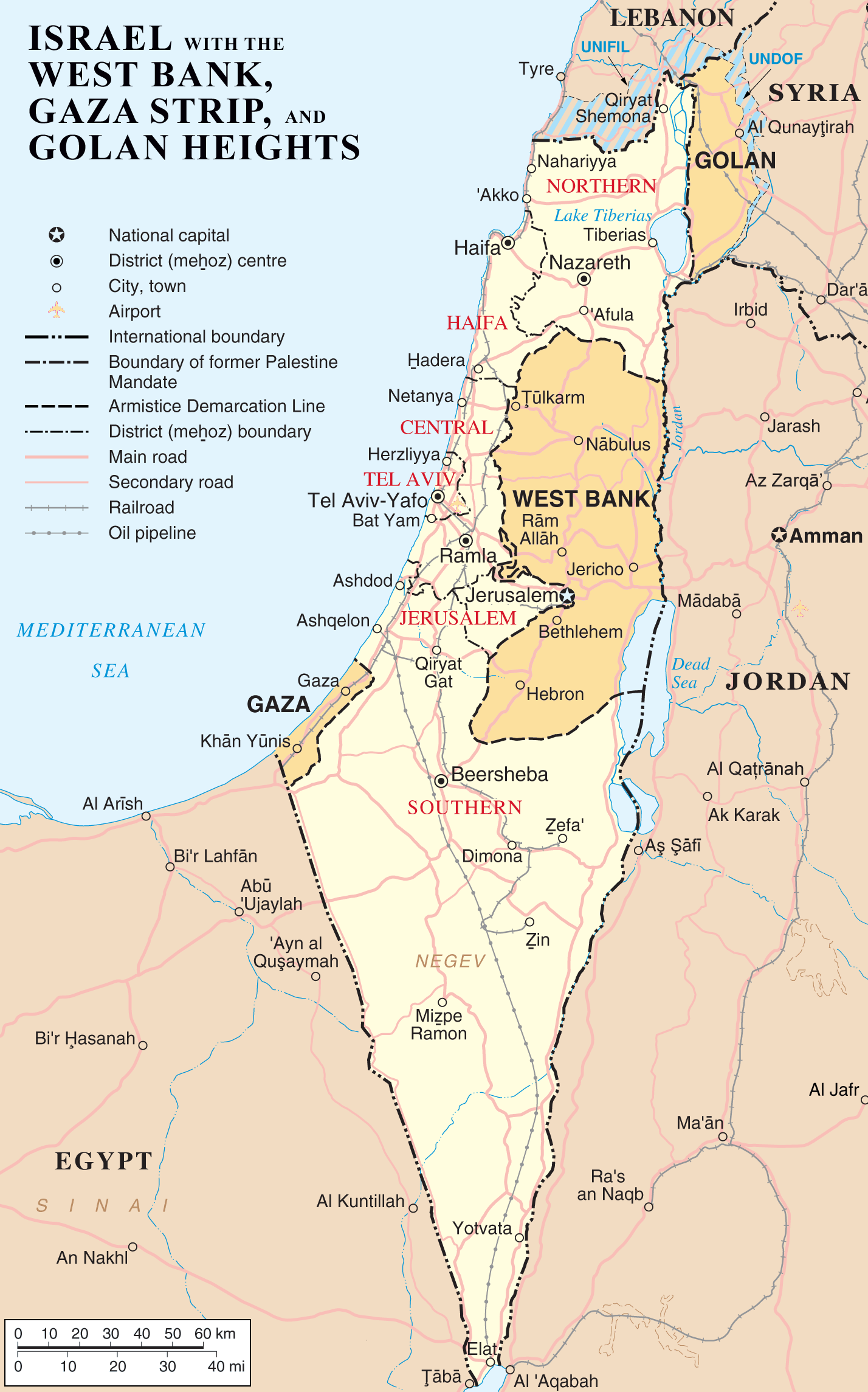
I have one of these basic maps of Jerusalem that the madrichim gave me during orientation. And to be honest, it's helpful in gauging how far I am from the center of the city, but it doesn't really help me figure out my own neighborhood on the French Hill. I figured out where I am on the map-I'm located way in the upper right hand corner next to the label that says, "Published by Rami Meroz". But, I almost felt like an afterthought.

It actually took me an embarrassing amount of time to figure out exactly where I was in relation to the Palestinian Authority of the West Bank, and why people were afraid to walk around our East Jerusalem at night. I was surprised by the fact that there were so many Palestinian people and Arabic writing on stores. I noticed that at the bus stops around the dorms, the "Arab buses" also made their stops, although I never knew where they were going since there were no signs indicating that there was even a stop for them there. While in the city, Egged buses roamed the streets, and I never saw these "Arab buses" anywhere. I even recently found out that there is a refugee camp right next to the French Hill-the Shuafat refugee camp, and the Wall is right here too!

I was confused about why I would hear people saying we're basically IN the West Bank. I thought, no way. We couldn't be! The West Bank and Ramallah are only chimeras you hear about in the news. They don't actually exist.

Well, yes, of course they do. I live only 30 minutes away from Ramallah. After some intense research on Wikipedia, I can explain this a little better for you.

Jerusalem is on the very edge of the border between Israel and the West Bank.

East Jerusalem (where I live), is land that was captured by Israel in the 1967 Six-Day War from Jordan. East Jerusalem is where the Old City is located, and where most of the holiest sites for Muslims, Jews, and Christians are located like the Temple Mount, the Western Wall, al-Aqsa Mosque, the Dome of the Rock, the Church of the Holy Sepulchre, the Mount of Olives, etc.

After the 1948 war and the inception of Israel, Jerusalem was split into East and West. West Jerusalem was mostly Jewish and under Israeli sovereignty, while East Jerusalem was mostly Arab and under Jordanian jurisdiction.

Mount Scopus (where French Hill is) was an Israeli enclave in East Jerusalem. So, it was not considered to be part of East Jerusalem, whereas geographically, it is.

Also an interesting statistic that Wikipedia gives is that 42% of the population of East Jerusalem is Jewish-making up 39% of the Jewish population in Jerusalem; 53% of the population of East Jerusalem is Muslim-making up 99% of the Muslim population in Jerusalem; and 3% of the population of East Jerusalem are Christian-making up 92% of the Christian population in Jerusalem.

Of course these numbers aren't completely accurate and are probably skewed and controversial because of political purposes, but it's valuable information nonetheless.

Anyway, here is a useful map:

Sunday, September 14, 2008

Run with me

The hills around here are killer!

Here is the view right outside of the Student Village where I live. To the left is the path I walk towards the University and the blue curved roofed building is the over-priced gym.


So, I could pay for an expensive gym membership card that I would rarely use because I hate gyms (I feel like I might as well turn into a hamster and run in one of those crazy yellow wheels), I run around the French Hill and take in the sights, the car honks, the exhaust fumes, the great sunsets that could rival those of Los Angeles, the smell of falafels at the two stands nearby, the other intrepid runners looking like we all could pass out any minute now, the loud Arabic techno blasting from every other car, and of course the most wonderful views of Jerusalem from atop Mount Scopus.

Here is photo documentation of one of the routes I like to take at sunset if I can wake up early enough from my ritual afternoon recovery snooze from 8:30am Ulpan.

When I get to the bottom of the hill from the Student Village, I turn left towards the University and start my uphill climb. This is the view I get to my right:

That part is relatively easy since it's the only flat part of my run.

run run run towards the Mount of Olives:


More uphill running...and still some very pretty views:


And the final and most strenuous leg of my ascent:

almost there...


I get to the top of this hill which is marked by the end of the road in the previous picture with the tunnel (where to the right is the Mormon University-BYU), and I'm panting and sweaty and ready to keel over, but when I turn around, I get my reward:


I stay and stretch for a few minutes, and then I congratulate myself each time for not passing out earlier.

Then I'm off again. And this time, I get this view the whole way down:

I'm really loving this city.

Tuesday, September 9, 2008

From ouds to rap

On my way back home on the bus from the old city tonight, two men sitting next to me took out their ouds and had a little jam session in the back of the bus the whole way home. They were pretty good too! I love the Middle East.

I asked if it would be all right to take a picture:


Also, some other good news, I got an internship!

I'll be working under a professor at the Truman Institute with her project on Palestinian youth culture-specifically the Palestinian hip-hop and rap scene.

The professor is good friends with G-Town and Saz, and hopefully I'll get to meet them too. Look them up on myspace.com music-they're really good. Also, check out DAM, The Philistines, Sabreena da Witch (Abeer), and P.R. The Palestinian Rapperz.

Jordan, working for you was the best idea ever.

Friday, September 5, 2008

"It is good to die for one's country"

A few days ago, on my walk back from Ulpan to the dormitories for my ritual afternoon nap, I was stopped on the sidewalk by a policeman telling me I couldn't continue down the street. He told me and my friend to wait at the end of the street because there was a suspicious object underneath the seat of the bus stop. As we grumbled back to the way we'd come from, a soldier in SWAT gear came running past us carrying bomb equipment.

Here, in Israel, if you leave your bag anywhere, consider it a goner. I'd seen this in the movies, but forgot that this actually was a daily occurrence here in Israel. All those strange contained exploding sounds I hear every day from my open window finally made sense.
While we waited for the explosion, we joked that in Israel, instead of telling my teacher that my dog at my homework, I could say the IDF (Israeli Defense Forces) blew up my homework.

In retrospect, this could have not just been a false alarm. The bag could have actually had something dangerous in it, and this is the reality that Israelis live with every day. It was a strange experience to
see how seriously the Israeli policemen took their duty to neutralize the bomb threat situation and how nonchalant and normal the locals acted toward this almost daily "nuisance".

During my weekend in the Golan Heights and the upper Galilee, we took a hike around the Tel Hai area on the way to the swimming pool at the local kibbutz. We stopped by the Roaring Lion Monument, which is a famous memorial of the Battle of Tel Hai to eight Jewish men and women who died in one of the earliest battles between Jews and Arabs. The site www.gemsinisrael.com explains:
"If the brave pioneers at the beginning of the last century had not had the fortitude to withstand the hardships of the day, the Galilee as we know it today, would never have become part of modern day Israel. "

On the monument, Trumpeldor (one of the eight Jews who died in the battle) is quoted, "It is good to die for one's country".


Then, a little further outside the monument, we stopped by another memorial for twelve soldiers who died by the kibbutz during the most recent Second Lebanon War only three summers ago. This memorial included photos of the twelve dead soldiers, and our tour guide apologized that she knew we just wanted to go swimming, but she could not just walk
by without paying her respects to these soldiers. She explained that in Israel, because the army is made up of reserves, almost every Israeli you meet will know someone who died while trying to defend his/her country.

She said that unfortunately, the fight for Israel's existence did not end with the Battle of Tel Hai, and this recent memorial attested to th
e continuing battle towards peace.

She then apologized again if she made us sad. But then she said that this is how people lived in Israel. One minute, you could be on a jolly walk towards a cool swimming pool, and the next minute be saddened by reminders of deaths of comrades, but that wouldn't stop her from jumping into the pool anyway. Her message was that life is hard in Israel because the people here are perpetually reminded that they have to fight to exist on this land, but that's just the way it is. Life moves on.


I was really impressed and touched by her explanation, and despite the sweltering heat, I wanted to stay a little longer and read the plaques. Instead, I snapped some quick photos as the rest of the group headed along towards the beckoning pool.


This reminded me of my post a while ago where I was writing about Israeli nationalism and wrote:
"...the guy with the gun hanging precariously out of his back pocket got in [to the restaurant] remind you just how badly this country wants to exist, and just how much it fears for its existence. Desire and fear together usually don't make for the best pair, but it does make for strong nationalism. Whether this is good or bad, I have yet to decide, but I think that if anything, the country is in danger of fostering a radical or fundamentalist mentality in the pursuit of stability while in the process excluding and angering many."

At this time, I was struggling with the fact of Israel's fundamental means of existence without actually respecting the people who have sacrificed their lives for their country. Often times, as an American of Asian descent in Israel, I've never felt so unwanted in a country. Maybe it's because I'm Asian. Maybe it's because I'm obviously not Jewish.

Truth is, because I'm not Jewish, it will be nearly impossible for me to gain citizenship to Israel. Truth is, the Israeli government really doesn't care about non-Jews just as long as the Jewish people have somewhere to call home, no matter how many people they displace and discriminate against. I often have to remind myself that Israel is an ethnocracy not a democracy.

On one side, the idea of making Aliyah and finding sanctuary in a place you can call home is beautiful, and I sincerely believe that any people feeling like they have no homeland have a stronger and many times a more admirable form of nationalism and civic pride. On the other hand, one needs to remember at whose expense the country is surviving.

It's important to remember that one can be pro-Israel and still criticize its policies.

I saw Israeli nationalism as almost chauvinistic and supremist by turning a blind eye to the essential point that Israelis possess an incredible amount of pride and love for their country. This was wrong of me. Yes, I still believe that intense nationalism does not justify discrimination, but it is a passion that deserves credit for the people who believe in the right of their country so much to risk their lives for it. This is a universal sacrifice and dream-even Americans over in Iraq and Afghanistan lose their lives daily for a war that most Americans don't support. In the end, we always support the troops even if we are against the violence and the war.

I know that since I've been here, I've done a lot of complain
ing about just how ineffective everything seems to be around here or how frustrating and roundabout the bureaucracy is or how irritating it is to even complete the simplest tasks like figuring out the everchanging and fickle bus schedule. After listening to our guide speak so eloquently that day and having spent a month in Jerusalem, I've become resigned to the fact that there is no such thing as simple in this country. And that's just the way it is. Life moves on. Everything eventually works out, though it requires a little more patience on my part. And God knows, I could learn to be more patient.