Had a funny even almost nostalgic moment today:
I was walking to class when I noticed a lone backpack on a bench outside of the school. I half expected it to explode while wondering where the bomb squad was.
Monday, March 30, 2009

Tuesday, March 17, 2009
35 Minutes

Taking the ferry between Tangier, Morocco and Tarifa, Spain is remarkably easy and fast. The trip between two continents and two worlds is only a 35 minute brisk ride across the Strait of Gibraltar and once on the other side, the other-other side remains a hazy outline in the horizon.
To travelers, it’s a godsend -a convenient way to hop across continents to explore a different culture in just over half an hour. In our high-speed/ ADD, internet dominated society, sitting in an air-conditioned luxury cabin including a decent cafeteria and duty-free shop and entertained by fragrance commercials of frolicking beauties for 35 minutes is an incredibly convenient and doable way to experience the exotic.
Many travel agencies in Spain offer weekend trips to Morocco. Most even offer day trips to Tangier. Spend the day in a Muslim country but sleep in the comforts and conveniences of a western one.
At the customs desks, my mom and I sailed through with our American passports.
At the ropes separating those leaving the country from those staying, (a.k.a. those with passports and those without), a middle-aged Moroccan man grimaced and brusquely swept away his tears, while his son looked away with bleary eyes, and his hijab-donning wife cried freely on him.
Another man, maybe his brother or a friend gently but firmly held the wife back while the man, with his Moroccan passport in his left hand placed his right hand on his wife’s shoulder as the deep creases in his too-young face tightened in a final bid adieu before stepping beyond the ropes.
Morocco is plagued by high unemployment (my professor likes to call it “serious hanging out”) and widespread poverty. Many Moroccans have college degrees but still beg on the streets. Every day in Spanish news, especially in Andalucia, you hear tragic stories of illegal Moroccan emigrants washing up on shore after drowning in the sea on precarious patera boats. It is not only extremely difficult to obtain a visa to work or study abroad, but it is also often difficult to even acquire a passport. The deck of our ferry had a direct view of the port where Moroccan youth spend all day every day smoking and watching port-traffic.

This scene is a common one in stories of the emigrant experience. It reminded me of my own father leaving us in Los Angeles since I was twelve years old to work in Seoul to support the family.
However, a fundamental difference is the intensity of our farewells. When my dad leaves, my brother and I barely roll out of bed to wish him a safe a trip and send him off to the airport with a gruff hug. My mom will accompany him, and we’ll crawl back into bed not worrying when we’ll see him next.
We know he’ll be back in a few months. We’ll e-mail or call every so often. It’s no big deal. It’s been more than seven years since this coming and going has gone on.
As I witnessed this scene at Tangier customs, I wondered when this man would ever see his family again. Perhaps this was his first time away from home? Perhaps this was the first time he was abroad? Or perhaps, he was going for a long time, and he didn’t know when he would be back.
When my dad leaves to Seoul, he is in a sense going back home. Though he is very much Americanized, Korea is still his birthplace and his homeland. He is going somewhere where there will be no language barriers and where he will find familiar food and faces. It’s still very hard to have our family separated, but at least he is somewhat at home.
It was a little bit strange to be on this ferry filled with Americans, Spaniards, French, and Germans-all tourists who mostly when they got on the boat didn’t take a second look back at Tangier and settled into plush chairs inside the air-conditioned cabin.
Then there were the Moroccans-mostly men and mostly young to middle-aged. Instead of walking into the cabin, most of them stood silently on the small deck smoking cigarettes and leaning over the rails as if their Moroccan blood was pulling them back to squint through the hot sun back at Tangier.


Before departing, a loudspeaker directed the passengers with safety precautions in English, French, and Spanish. When my mom went to buy an orange juice at the cafeteria, they assured her that they only took euros.
As we pulled away from the port, many tourists came out to the small deck to wave good-bye and take a few pictures as the tallest minaret faded into the distance. Some of the Moroccan men took out their camera phones and took pictures of themselves and the wide expanse of ocean behind them, but most of them just stood silently leaning over the rails for the 35 minutes until we reached Spain.
Friday, February 27, 2009
Carnaval, Picha!
(I meant to post this last night, but THOMSON, my wifi-privileged neighbor cut off.)
The week of Carnaval is wrapping up here in Cadiz.


Weekend number two, here we come!

The week of Carnaval is wrapping up here in Cadiz.
Tonight is night seven, and there are still
There are still confetti and empty Cruzcampo beer bottles littering the narrow alleys left by the throngs of chirigotas fans. There are still nightly concerts of Andalucian flamenco wailing-at-the-top-of-my-lungs-while-my-guitar-gently-weeps that last until 3am.
The temporary buñuelo stands woo passerbyers with fresh fried donuts drenched in chocolate sauce, and the candy vendors bundle up under fluorescent colored lights and five euro hats and wigs waiting for the nocturnal sugar craving or the beer munchies. Men still frolic through the streets blowing their kazoos and flouncing their chirigota costumes; while the neon carnaval lights strung up in every street beckon night-long debauchery until dawn.
Carnaval in
The city’s demographic also becomes conspicuously young as the elderly, seasoned Gaditanos take their seats along the busy pedestrian streets to judge this year’s selection of costumes on the fresh-faces of carnaval aficionados. Hippies and bums come from all over
The first Saturday is the big day for costumes, when if you aren’t wearing a costume or some sort of ridiculous, colored wig, people will stare and wonder what the hell you were thinking. I was Michelangelo-you know, from the Teenage Mutant Ninja Turtles. I was never a big fan, but I thought I’d give my brother a tribute. Regardless, I’ve seen costumes every day of this week. Carnaval-goers really take to heart, “go big or go home”.


Weekend number two, here we come!

One Month Down


I've been in Cadiz for just over a month now. I've had two weeks of university classes (this week is vacation for Carnaval-that post is next), and I feel very settled in my host family's home despite the inevitable moments of culture shock and the mutual gaps in understanding.
My host mother Rosa is a typical Andalusian woman; she's bien fuerte (loud, garrulous, likes to gesticulate a lot); she chain-smokes from the minutes she wakes up to the minute her head touches the pillow; she makes great desserts from just milk and a box of flan powder; she's liberal with the olive oil; she's opinionated; she laughs easily and extra-loudly before wheezing into a cough; she often shrugs her shoulders and looks at you in disbelief while saying "Hom-BRE, cla-RO!" in response to questions that shouldn't elicit such passionate responses; and of course, she's generous with her love.

(here's everyone preparing Carnaval costumes. Rosa's the one in the bright blue robe on the right holding that ubiquitous cigarette.)
My host sisters Rosita and Sonya speak in the manner of true Andalusians slurring their words and talking so fast I often wonder if I learned the right kind of Spanish.
That's three women, now four with me me, in the house, but there are more females living here. Two dogs that bark incessantly and wander into my room because they know I drop cereal on the floor when I reach for my midnight snack; a cat that snuggles in my pajamas after making its rounds of the bidet in the bathroom; and there's also some sort of gecko in the kitchen-it's so quiet I barely remember it exists, but I'm pretty sure it's female too.
My spoken Spanish has greatly improved, and I was just mentioning to a friend that I could probably dominate at the listening comprehension section of any Spanish test since the Gaditano tongue is the fastest kind of Spanish there is.
Example: There's a saying "No todos pueden ser de Cadiz." Meaning not everyone can be from Cadiz. But Gaditanos would say while gesturing wildly with their chins, "No to pue se de Cai." Where did half the syllables and consonants go?
I spend most of my days when not in class idling away the hours reading, running, taking long siestas, sitting at the beach, and wondering what I'm doing with my life here. At night, I've taken to watching Korean dramas on mysoju.com, which has helped improve my Korean a lot, but it's also made me extra-dramatic and wistful.
I intended on taking advantage of Cadiz's southern tip proximity to Morocco by focusing on the Islamic influence and the history of al-Andalus, but it seems that Cadiz is not really the right place for it. I'm a little disappointed and unsure of how to organize my feelings and goals right now.
It's like I'm coming down from the most focused high in Jerusalem to this idyllic paradise where my days pass in a slow haze of listlessness.
These days have been so undemanding. What do I have to complain about?
My routine is a little skewed. I sleep at 2am or 3am because my neighbor's wifi internet connection kicks in around midnight, so I'm drawn in by e-mail, perezhilton.com, the paper, facebook, skype, everything.
I wake up whenever I very well please, which is usually around noon. Hear me out before you judge me, please. Although last semester I slept in an actual bomb shelter, it is here in Spain that I actually feel like I sleep in a bomb shelter. Or a bat cave. No windows in my room, so it could be 5am or 3pm for all I know.
Anyway, it's not only my week off; the whole city gets this week off to revel in Carnaval delights. Even if I don't deserve it, the rest of the city deserves a break.
My mom is coming to visit next week, and I'm giving her a whirlwind tour of Madrid, Barcelona, Paris, Marrakech, Rabat, Fes, and Tangier before finally introducing her to Cadiz. She sent me to all these places before, and the least I can do is bring her to them so she can enjoy them too.
I'm so excited to get out and travel again, but I'm more excited because maybe this will be the motivation and inspiration I've been so lacking.
Thursday, February 5, 2009
Back From Hiatus
Both having spent our college years in Boston, a conversation that often comes up between my cousin and me when I'm back home is how the weather in Los Angeles is almost too perfect.
Granted, I'm usually only back during the summer when L.A. is glimmering at its best.
Before any of you stuck in snow or bitter New England winds wonders why I don't shut up and stop complaining about good weather, hear me out.
Weather in Los Angeles is fantastic. Winters are chilly, but I've never had to whip out more than the occasional scarf, which I would wear more for fashion than for warmth. Earmuffs, gloves, Northface armor coats-all unnecessary. Plus, we've got those Santa Ana's.
Warm springs beckon hot summers, and the occasional shower ensures some green in the concrete mess of freeways. Summers are hot and dry, yes; and in the Valley, it's almost unbearable. But the days are tempered by the proximity of the beach, and the balmy nights make up for the scalding heat.
And autumn, my favorite season anywhere; fall in L.A. is marked by warm, windy days. Sure, we Angelinos don't get to enjoy the passing of time with rainbow foliage, but we also don't have to start dreading the cold either.
Los Angeles glows with sunshine.
But sometimes, all that sunshine seems to mock you when you're having a bad day. I like that Boston weather can reflect my feelings; torrential rains and howling wind when I'm pissed, and gloomy gray skies with the occasional flurry when I'm sad.
This year, I'm spared the New England winter, that bitter cold that every year makes me grumble how any human or living life form can survive in weather like it. It's the weather in which I have to remind myself "left, right, left, right..." while I walk to and from class as I bend my head forward against harsh gusts of wind.
This year, I missed the colorful leaves, but I breathed a sigh of relief that I would not have to trudge around in my Uggs, simultaneously wear three pairs of pants, or have to write a postage note on my window to remind myself that sunshine does not equal heat.
Instead, I spent last semester in Jerusalem where the weather was much like an extended summer for me until one day, in mid-December, someone somewhere must have snapped, and it just got cold.
This semester, I'm in the Costa de la Luz, in Cadiz, the city that boasts something like 350 days of sunshine. Luckily, it seems I've arrived during those 15 days without sunshine.
It's been about a week and a half since we've arrived in Cadiz and about two and a half weeks in Spain. I've written since three posts, two of which are not about Cadiz. Already, I spent a weekend away.
I remember writing towards the end of last semester on my reflections of culture shock. In that post, I wrote that I would probably initially feel unhappy in Cadiz just like I initially didn't like Jerusalem. In it, I wrote that I would remind myself to reread those posts and take it in stride.
But the difference is that even when I was unhappy in Jerusalem, I still had so much to write about and think about and talk about. I'm not unhappy here in Cadiz, but I'm bored. Apathy to me is far worse than extreme emotion whether it be hate or love. Life in Jerusalem was never easy, but it was always interesting.
How can I describe my feelings right now? I don't know if I can quite decipher them myself let alone articulate them in writing. I'm overwhelmed.
Cadiz is an incredibly underwhelming city. It was once a thriving port city, visited and inhabited by all kinds of historic folks, but these days, it's a sleepy beach town that's infamous for its February Carnaval debauchery. It's a mark on the map for a lovely day trip or a week-long siesta spent lounging and drinking on the beach at sunset.
Everything about Jerusalem was so extreme; when talking on the phone with my mom, I would often tell her that it was the hardest time I'd ever had being abroad. It was probably the best too. Life in Jerusalem was a semester of extreme highs and lows. I was never at peace; I was never idle. I don't think that anyone can completely understand Jerusalem or the conflict without living daily with the subtle yet omnipresent tensions surrounding and permeating every mentality, every simple decision made.
Cadiz is pleasant, and it is slow. Not only are faces becoming familiar, but the dogs are too. Problems are solved with a brusque "No te pasa nada", or as the Andalucians say, "No te pa na". And the closest thing to rioting would be the ensuing celebrations if Cadiz ever won a football match. The biggest news stories come from outside of Cadiz, which is quite a change from living under the global spotlight.
I brought up the weather because I can't adequately compare Jerusalem and Cadiz in terms of experience. There is no comparison-there is no better. Instead, let me compare the weather and point out the irony.
Jerusalem's weather was gorgeous. It was sunny. It was ideal. Yet, Jerusalem itself was not a happy city. Cadiz, on the other hand, is light and stress-free. Yet, the rain and the ocean winds have been relentless, and the sea boils and tosses angrily.
I get travel warnings that still come to me from the Hebrew University prohibiting students' travel to the Sinai Peninsula. I laugh as I reminisce about that bumpy midnight drive across the Sinai looking up out the window in the backseat wondering what Nicole was thinking, while now, I'm stuck under house arrest in Cadiz because of a hurricane warning.
"You have to be inspired to have passion." -TJ
I'm sorry I haven't been writing or updating. It was/is (reverse) culture shock. It was abrupt change. It was premature, unjust disappointment spawned from incomparable and irrelevant situations.
I needed to remember that inspiration can't always come easy. I need to rediscover my passion by finding inspiration in other places.
No more solitary brooding and futile nostalgia.
Not so quiet anymore, huh?
Wednesday, February 4, 2009
Banksy in Palestine
I was inspired by Eleri's "Banksy" post. :)
Banksy around the world, and here, Banksy in Palestine:
His most famous one there:


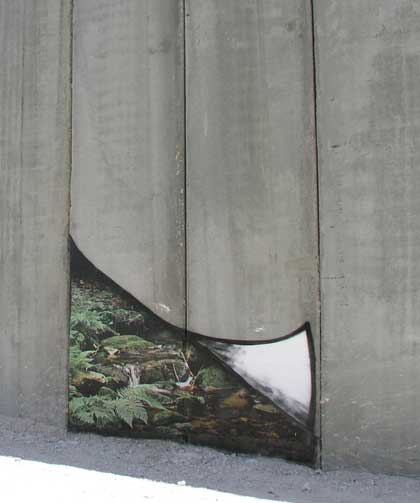

Banksy around the world, and here, Banksy in Palestine:
His most famous one there:
Monday, February 2, 2009
Weekend Excursion to London
I love that this is possible.
Spent the weekend in London visiting friends and just barely missed the snow. I was surprised by London. I'd never been interested in visiting, but it's really such a cool place, and I never even got to see a tenth of it. Such diversity and such style. It was a nice change from the homogeneity of small town Cadiz.
I visited some of the big sites: Big Ben, Buckingham Palace, Paddington Station, the London Eye, Parliament and even walked through a demonstration for the Tamils.


I ate some wonderful (and cheap) Pakistani food at Tayyab's and top-notch dim sum at Pearl Liang's for if you're ever in the
 London area.
It seems these days I'm not feeling very loquacious.

Spent the weekend in London visiting friends and just barely missed the snow. I was surprised by London. I'd never been interested in visiting, but it's really such a cool place, and I never even got to see a tenth of it. Such diversity and such style. It was a nice change from the homogeneity of small town Cadiz.
I visited some of the big sites: Big Ben, Buckingham Palace, Paddington Station, the London Eye, Parliament and even walked through a demonstration for the Tamils.


I ate some wonderful (and cheap) Pakistani food at Tayyab's and top-notch dim sum at Pearl Liang's for if you're ever in the

 London area.
It seems these days I'm not feeling very loquacious.

Saturday, January 24, 2009
¡Bienvenidos a Cádiz!
It's been a while since I've updated.
In the past few weeks, I returned home for about a week to sunny Los Angeles and then hopped on another flight to Madrid. Now I've finally arrived in Cadiz.
In Madrid, I saw a lot of graffitti on the walls with drawings of tanks and "Israel asesina", and a lot of the girls here sport colorful keffiyehs though more for fashion than for any political statement, I think.
To be quite honest, I don't have very much to update on. Cadiz is just as small and lovely as I remember despite the unseasonal squally weather. The roads are narrow and cobblestoned with winding alleys that lead into hidden plazas warbling with bubbling fountains and gnarled tree roots jutting up from ancient mosaic tile floors.
It's just been such a strange and abrupt transition from Jerusalem (almost like a reverse culture shock with a more familiar yet different culture), and I think I need more time to settle and resolve my experiences from there before I can embark on any here.
Monday, January 5, 2009
It's still surreal.
August 9, 2008
-"Every time I walk to Hebrew class and survey the view overlookingJerusalem
Finally made it to the Dome of the Rock and al-Aqsa today.

Look at how excited I was-I subconsciously even dressed in the same colors!

And I still can't stop smiling.
I know I haven't updated in a while..my heart just hasn't been up to it.
-"Every time I walk to Hebrew class and survey the view overlooking
Finally made it to the Dome of the Rock and al-Aqsa today.

Look at how excited I was-I subconsciously even dressed in the same colors!

And I still can't stop smiling.
I know I haven't updated in a while..my heart just hasn't been up to it.

Sunday, December 28, 2008
Escape to the North


Spent the day in Haifa today: Bahai Gardens and a view of the sea. Really cleared my head.
Saturday, December 27, 2008
The Apartment Pariah
I consider myself to be of the moderate-Left in Israeli politics.
To my consternation, my roommates asked me before hanging up an Israeli flag in the living room if it was all right. The Palestinian flag graces my desktop partly because it just looks so cool.
And I never understood how people could get so worked up over politics.
So much has happened today. This morning Israel attacked Gaza with air strikes killing more than 200 people and counting. As I read the paper, some part of my brain wondered what kind of retaliation this first attack would bring.
This afternoon, as I set out on my post-Shabbat dinner mandatory jog, I noticed plumes of black smoke near the Hebrew U campus. As it is on my usual route anyway, I figured I would run into the source sooner or later. I didn't think it was anything serious as cars zoomed past in their normal fashion and the usual few people strolled along the streets.
I didn't end up running into the source as it was further away than I had expected, but instead along the course of my jog, I kept hearing mini-explosion sounds coming from the east. Then I noticed through my headphones several sirens as police cars and ambulances rushed toward the Arab villages in East Jerusalem. I thought I was crazy as I looked around to gauge other people's reactions, but no one else seemed to be phased by it. Israelis. Then I saw another great plume of smoke coming from the Shuafat RC area as helicopters droned overhead. Something was definitely wrong.
My roommates and I frantically tried to get any news on what was going on as we realized this was Palestinians in the West Bank and East Jerusalem rioting in response to what had occurred in Gaza this morning. Unfortunately we don't have a t.v., and for some reason, there was and as I write this post, continues to be no news on what happened earlier tonight in Jerusalem.
As we all congregated in one of my roommate's rooms with our laptops propped open furiously checking all the news websites, I wondered aloud if most of the people killed in the Israeli attack were civilians or security personnel. One of my roommates matter-of-factly said "They were all security personnel." To which, I retorted, "That is most definitely not true. Civilians are dead."
-"Well, they [Palestinians] put their weapons in libraries, hospitals, schools, etc."
-"And Israel still struck them."
My other roommates looked a little shocked by my response as one explained that the majority of the dead were Hamas security while there were also civilian deaths. Then one by one, everyone filed out of the room, and soon I was left in an awkward silence with only the room's inhabitant. I got up and left too. As soon as I left, they all went back in and closed the door behind them.
Perhaps I was a little too abrupt-too aggressive. Maybe I could have been more diplomatic and tried to be funny about it. No, I couldn't have. People are dead-and these people include innocent men, women, and children. There's no use in playing the blame game I realize, and I'm not sure what exactly makes me so upset.
But this is not the point of the post.
My roommate and I don't even live here; we don't suffer the way Israelis and Palestinians suffer here on a daily basis from the occupation and from terrorism. Yet, we get so impassioned by the politics that embroil this city, this country, this region. I couldn't understand how Israelis and Palestinians in Jerusalem could live side-by-side everyday without really talking to each other. And now, I understand, sometimes it's just easier to walk away and ignore the other side than get into the politics.
-The Morning of Shabbat-
I wake up to muffled shuffling outside my door.
My roommates are awake; the aroma of coffee drifts under the cracks of the door.
Sabbath morning tranquility abounds.
I grab a mug and start editing my paper.
After two hours, my brain already feels fried, and I need a break.
I decide to check out the newspaper.
And I realize this has already happened in the morning.
While I'm lolling around in my pajamas, only 48 miles away, 160+ are already dead.
Thursday, December 25, 2008
Christmas Eve in the House of Lamb/ Bread
Merry Christmas!
 This will be a Christmas eve I'll never forget; I spent last night roaming around the windy streets of Bethlehem.
Traffic getting into Bethlehem was pretty bad but expected-lots of tour buses of course. Driving into Bethlehem was interesting: a few weeks back, I went on a tour with Ir Amim and stopped by the wall on the Israeli side, and here I was on Christmas eve driving along the wall on the Palestinian side.
There were more phrases similar to the famous "If you destroy our houses you will not destroy our souls" but more like "those who built this wall shall fall with it", and there were also these great murals of Ghandi and other famous figures. I wish I'd stopped to take a few pictures, but you get the idea.
Also, driving in, I was almost disappointed with the kitschy, artificial bright Christmas lights that beckoned the pilgrims toward the site of Jesus' birth-it was all too touristy-a little too commercialized for comfort-almost sacriligeous. Anyway, this is when Bethlehem receives a huge chunk (if not most) of its tourism revenue, so I guess a little capitalization is expected.
On the other hand, I felt little pangs of nostalgia gazing around at the glaring, blinking Christmas lights everywhere and the Arabic version of Jingle Bells blaring away on the taxi cab radio. Even the usually sinister blow up Santas waving in store fronts seemed kind of friendly.
Additionally, something very interesting: the streets were full of P.A. police and army personnel. Abu Mazzen (President Abbas) was in town. Those poor men standing out in the brutal winds all night-that's quite the merry Christmas.
I went with two friends from Rothberg and we met with an old friend/Palestinian tour guide and went around Bethlehem together with a few other internationals (mostly American).

First we went to a Christmas pageant of sorts. My friend dubbed it "the Love Actually Christmas pageant-Arab style". It wasn't bad. But it wasn't good either. Mostly, it was just nice for me to be in the family-festive environment for the holidays. Also, it was more of a community-style event with few foreigners; and honestly, I felt almost like I was intruding.
When we awkwardly tried to blend in as we walked through the tightly squeezed rows of Palestinian families and finally found seats in the back corner, there was a huge group of little girls just staring-they really couldn't get enough. So I just smiled and slowly they inched their way closer to my chair. After a children's Christmas play in Arabic (from which I gleaned a few Arabic vocabulary I thought had been lost forever in the recesses of this language-barraged brain), and two hours, the girls finally got the courage after nudging each other and whispering to ask me what my name was. Unfortunately, we left soon afterwards, but I did get a chance to snap a photo with a few of these girls.
Then we took a freezing stroll to the Church of the Nativity that was brimming with Christians, pilgrims, tourists, everyone! You could hear Arabic, Japanese, Spanish, English, Swedish, German, Russian, Italian, no Hebrew.
We ate at a small restaurant and then made our way through the crowds to the Manger Square where I was greeted with a carnival-like atmosphere of food carts, neon lights, someone crooning a love-song in Spanish in the background, crowds of people, and just what a festive feeling.

(In the restaurant-interesting political commentary, don't you think?)
We couldn't get into the Church of the Nativity because a) we didn't have tickets; b) Abu Mazzen was in there; c) no one was really interested in going in except for me.
There was tight security getting into the Church of the Nativity because of Abu Mazzen's posse.
Anyway, we topped off the night at a local Palestinian restaurant/nightclub. We joined in with the locals to dance to techno and Arabic music and donned Santa hats while waving our arms in that beautiful Arab style. What an unforgettable way to bring in Christmas.


A photo op with the P.A. policemen.
 This will be a Christmas eve I'll never forget; I spent last night roaming around the windy streets of Bethlehem.
Traffic getting into Bethlehem was pretty bad but expected-lots of tour buses of course. Driving into Bethlehem was interesting: a few weeks back, I went on a tour with Ir Amim and stopped by the wall on the Israeli side, and here I was on Christmas eve driving along the wall on the Palestinian side.
There were more phrases similar to the famous "If you destroy our houses you will not destroy our souls" but more like "those who built this wall shall fall with it", and there were also these great murals of Ghandi and other famous figures. I wish I'd stopped to take a few pictures, but you get the idea.
Also, driving in, I was almost disappointed with the kitschy, artificial bright Christmas lights that beckoned the pilgrims toward the site of Jesus' birth-it was all too touristy-a little too commercialized for comfort-almost sacriligeous. Anyway, this is when Bethlehem receives a huge chunk (if not most) of its tourism revenue, so I guess a little capitalization is expected.
On the other hand, I felt little pangs of nostalgia gazing around at the glaring, blinking Christmas lights everywhere and the Arabic version of Jingle Bells blaring away on the taxi cab radio. Even the usually sinister blow up Santas waving in store fronts seemed kind of friendly.
Additionally, something very interesting: the streets were full of P.A. police and army personnel. Abu Mazzen (President Abbas) was in town. Those poor men standing out in the brutal winds all night-that's quite the merry Christmas.
I went with two friends from Rothberg and we met with an old friend/Palestinian tour guide and went around Bethlehem together with a few other internationals (mostly American).

First we went to a Christmas pageant of sorts. My friend dubbed it "the Love Actually Christmas pageant-Arab style". It wasn't bad. But it wasn't good either. Mostly, it was just nice for me to be in the family-festive environment for the holidays. Also, it was more of a community-style event with few foreigners; and honestly, I felt almost like I was intruding.
When we awkwardly tried to blend in as we walked through the tightly squeezed rows of Palestinian families and finally found seats in the back corner, there was a huge group of little girls just staring-they really couldn't get enough. So I just smiled and slowly they inched their way closer to my chair. After a children's Christmas play in Arabic (from which I gleaned a few Arabic vocabulary I thought had been lost forever in the recesses of this language-barraged brain), and two hours, the girls finally got the courage after nudging each other and whispering to ask me what my name was. Unfortunately, we left soon afterwards, but I did get a chance to snap a photo with a few of these girls.

Then we took a freezing stroll to the Church of the Nativity that was brimming with Christians, pilgrims, tourists, everyone! You could hear Arabic, Japanese, Spanish, English, Swedish, German, Russian, Italian, no Hebrew.
We ate at a small restaurant and then made our way through the crowds to the Manger Square
 where I was greeted with a carnival-like atmosphere of food carts, neon lights, someone crooning a love-song in Spanish in the background, crowds of people, and just what a festive feeling.

(In the restaurant-interesting political commentary, don't you think?)
We couldn't get into the Church of the Nativity because a) we didn't have tickets; b) Abu Mazzen was in there; c) no one was really interested in going in except for me.

There was tight security getting into the Church of the Nativity because of Abu Mazzen's posse.
Anyway, we topped off the night at a local Palestinian restaurant/nightclub. We joined in with the locals to dance to techno and Arabic music and donned Santa hats while waving our arms in that beautiful Arab style. What an unforgettable way to bring in Christmas.


A photo op with the P.A. policemen.
Sunday, December 21, 2008
Happy (C)hannukah! On a lighter note...
-Professor: "Has anyone been keeping up with what's going on with Gaza these days?"
-general nods all around and a few feeble "yah"s
-Professor: "Well, there's going to be a war; you might as well know why and what's going on."
This is how this evening's From Che Guevara to Osama bin Laden: The International Maze of Terrorism and Guerilla Warfare (got all that?) seminar started off tonight.
Coincidentally, my friend e-mailed me this article this morning about Mubarak's lack of action against the Israeli siege on Gaza.
My professor explained that Hamas has been shooting rockets from Gaza into neighboring Israeli neighborhoods like Sderot even during the so-called truce. He said that everyone was just waiting for that "strategic missile" that will end up killing 10 or more Israelis (he's quite blunt-he said "we're just waiting for one to hit a nursery school.") Then, the process of gradual escalation will have begun, and soon, there will be a full-scale attack by the IDF into Gaza. According to him, this will (finally) be the elimination of Hamas leadership in Gaza.
Maybe you can eliminate the leaders, but the ideas will remain. If not Hamas, won't it be someone else?
He told us that 45 rockets had been launched into southern Israel in the last 48 hours.
"We are living in an insane reality. Enough is enough."
He angrily asked us, "What other country would tolerate missiles aimed at its cities?". He likened the scenario to Mexico shooting rockets to American border cities. He asked, "What would America do if this happened to you?" The answer is obvious.
He lamented that the Israeli government had let Hamas get as powerful as it is in Gaza right now, and compared the situation in Gaza to the one in Afghanistan.
However, he said he would never support an attack on Gaza without a solid and clear exit policy. No more Iraqs or Vietnams. He proposed that the Saudis invest in Gaza or that there be an international economic aid plan, though this will be difficult especially with the world economy slowly crumbling right now.
While he was saying all this, I was furiously writing away in my planner with little quotes of his with plans to write about it later, and he told me that he felt like he was being watched by Human Rights Watch-I wondered how he knew what my politics were anyway? I guess he realized this because he tempered this later by calling me the C.I.A.
His spiel reminded me of something else that is quite interesting: my Palestinian history professor has been telling us for quite some time that this coming January elections for the Palestinian Authority are going to be an extremely tense and volatile period; Mahmoud Abbas (current President of the PA) was/will be re-elected by Fatah, but Hamas in Gaza does not recognize his re-election. Hamas is threatening to elect separate leadership for Gaza thereby splitting the Palestinian people both physically and ideologically.
This professor has also been telling us all along that the time is ripe for a third Intifada-if not a civil war, and , and these January elections will act as the catalyst. This Intifada won't be against Israelis in actuality, but against them in practicality just to unite the Palestinians of Gaza and the West Bank together against a common cause.
But now, in the light of recent events, I wonder how this will affect the January elections?
Tuesday, December 16, 2008
Son of a gun...er, shoe.
I talked to a few people about the toy gun incident, and I've found out that during holidays (last week was Eid al-Adha or Feast of the Sacrifice), Palestinian children are given money and they go out and buy these toy guns and play a game similar to "cops and robbers", only it's really "Palestinians and Israelis".

After I got home from that walk, I asked a friend with some military experience, and he told me that it was probably a toy gun-what did he call it? An airsoft gun, and he'd seen a lot of Palestinian kids running around with them lately. He explained to me that they usually have this little plastic orange stopper that indicates that it's not real, but in the moment, who's looking for that orange piece? I probably didn't even notice it.
Then I asked one of my Palestinian friends about it, and he said that it was almost like a tradition as kids to play this game during holidays. Both of them insisted to my skepticism that it was fun. Sure, I guess. Is there that much of a difference between playing with toy guns and playing violent video games? I see a socio-economic difference, but maybe there's a different sense of reality too?
Again, it's such an odd dichotomy because guns are just a part of life in Israel. Here I was shopping at the shouk (like a crazy farmers market) the afternoon before Shabbat, listening to a street-side performance when lo and behold right in front of me:
 Strange that I can stand so close yet feel so unthreatened.
Also, a lot has happened lately in the Middle East what with President Bush getting shoes thrown at him in Iraq.
 I find Minister Maliki's resigned expression when watching the first shoe getting thrown kind of comical.
It's really interesting to get professors' reactions on the shoe-hurling incident, and two of my professors in particular had very different yet both very valid things to say.
The professor of my class for the Modern History of the Palestinians and the professor of my Israeli Foreign Policy class are both extremely respectable and humble individuals with doctorates under their belts and more personal relationships with big names than I can even imagine. Both have also taught many figures of the generation now in power in Middle Eastern politics and will often recall more for their sake than ours how these leaders were as their own students once upon a time.
It's so wonderful to get their often times completely opposite perspectives on the same events or political decisions, and the texts I read for each class offer so many opposing arguments whether they be inflammatory or sometimes they are simply misleading and almost deceitful with the purposeful lack of important details. Ultimately however, neither professor is completely this or that. Neither try to impose his views on us, the students. And both offer criticisms and praise for all parties involved.
My professor for the Palestinian class has close ties with many leaders of the Arab world as well as friendships with Israeli leaders. And my professor of Israeli Foreign Policy tells us personal anecdotes of famous Israeli leaders and once, so unassumingly, mentioned casually how he had gone to give blood with Winston Churchill (the grandson of the more prominent Churchill) while he was visiting Israel as a famous journalist to cover the Six-Day War of 1967.
In my Palestinian history class today, we discussed the first Intifada in '87 and the consequentially changed educational system of Palestinian youth. Up until the first Intifada, the Palestinian people did not have control over their own education-they could not contribute to the content, the curricula, or the agenda being imposed on their children. With the Israeli shutting down of schools during the Intifada, "popular teaching" arose with the Palestinization of education.
This education was informal, and because of the lack of textbooks, Palestinian youth were taught with the media available at that time. The media was dominated by political material that focused on resistance and encouraged mobilization and often radicalization. Thus, you have the politicization of youth.
(interesting video on current methods of introducing politics in youth culture and Farfour)
My professor brought up the infamous flying shoes, and told us how his Palestinian students at Al-Quds University had been so excited by this story and revered the shoe-thrower, Mr. Zaidi as a hero of the people. Instead of praising this act, my professor lamented the lack of education people were showing by deeming Zaidi's action as heroic. This lack of education he believed stemmed from this twisted form of education that began from the first Intifada.
He told us that he asked his Palestinian students what Zaidi had accomplished by throwing his shoes at the President when he missed both times, and ultimately, the meeting continued as usual. They answered that even though Zaidi missed, the shoe had hit the flag behind the President when Bush ducked. This was insult to America enough. Honestly, I didn't even notice. My professor angrily said that if he were the reporter, he would ask the question, "Aren't you ashamed to be in Iraq, Mr. President?" He believed that would have been more effective.
And again, playing "cops and robbers" with "Palestinians and Israelis"-another example of the politicization of youth.
In contrast, when my Israeli Foreign Policy professor brought it up in class today and a few chuckles erupted from the lecture hall, he angrily told us that it was not a funny matter. He said that as an Israeli, he was so insulted by such an uncivilized act towards the President of the United States. He reminded us that whether we liked him or not, Bush is still the President of the most powerful country in the world, and you are not. That should mean something to everyone.
Anyway, when I first read about this, I was impressed with President Bush, as I usually find myself with the charmingly self-mocking yet gracious way he is able to get himself out of uncomfortable/embarrassing situations.
After I got home from that walk, I asked a friend with some military experience, and he told me that it was probably a toy gun-what did he call it? An airsoft gun, and he'd seen a lot of Palestinian kids running around with them lately. He explained to me that they usually have this little plastic orange stopper that indicates that it's not real, but in the moment, who's looking for that orange piece? I probably didn't even notice it.
Then I asked one of my Palestinian friends about it, and he said that it was almost like a tradition as kids to play this game during holidays. Both of them insisted to my skepticism that it was fun. Sure, I guess. Is there that much of a difference between playing with toy guns and playing violent video games? I see a socio-economic difference, but maybe there's a different sense of reality too?
Again, it's such an odd dichotomy because guns are just a part of life in Israel. Here I was shopping at the shouk (like a crazy farmers market) the afternoon before Shabbat, listening to a street-side performance when lo and behold right in front of me:

 Strange that I can stand so close yet feel so unthreatened.
Also, a lot has happened lately in the Middle East what with President Bush getting shoes thrown at him in Iraq.
I find Minister Maliki's resigned expression when watching the first shoe getting thrown kind of comical. It's really interesting to get professors' reactions on the shoe-hurling incident, and two of my professors in particular had very different yet both very valid things to say.
The professor of my class for the Modern History of the Palestinians and the professor of my Israeli Foreign Policy class are both extremely respectable and humble individuals with doctorates under their belts and more personal relationships with big names than I can even imagine. Both have also taught many figures of the generation now in power in Middle Eastern politics and will often recall more for their sake than ours how these leaders were as their own students once upon a time.
It's so wonderful to get their often times completely opposite perspectives on the same events or political decisions, and the texts I read for each class offer so many opposing arguments whether they be inflammatory or sometimes they are simply misleading and almost deceitful with the purposeful lack of important details. Ultimately however, neither professor is completely this or that. Neither try to impose his views on us, the students. And both offer criticisms and praise for all parties involved.
My professor for the Palestinian class has close ties with many leaders of the Arab world as well as friendships with Israeli leaders. And my professor of Israeli Foreign Policy tells us personal anecdotes of famous Israeli leaders and once, so unassumingly, mentioned casually how he had gone to give blood with Winston Churchill (the grandson of the more prominent Churchill) while he was visiting Israel as a famous journalist to cover the Six-Day War of 1967.
In my Palestinian history class today, we discussed the first Intifada in '87 and the consequentially changed educational system of Palestinian youth. Up until the first Intifada, the Palestinian people did not have control over their own education-they could not contribute to the content, the curricula, or the agenda being imposed on their children. With the Israeli shutting down of schools during the Intifada, "popular teaching" arose with the Palestinization of education.
This education was informal, and because of the lack of textbooks, Palestinian youth were taught with the media available at that time. The media was dominated by political material that focused on resistance and encouraged mobilization and often radicalization. Thus, you have the politicization of youth.
(interesting video on current methods of introducing politics in youth culture and Farfour)
My professor brought up the infamous flying shoes, and told us how his Palestinian students at Al-Quds University had been so excited by this story and revered the shoe-thrower, Mr. Zaidi as a hero of the people. Instead of praising this act, my professor lamented the lack of education people were showing by deeming Zaidi's action as heroic. This lack of education he believed stemmed from this twisted form of education that began from the first Intifada.
He told us that he asked his Palestinian students what Zaidi had accomplished by throwing his shoes at the President when he missed both times, and ultimately, the meeting continued as usual. They answered that even though Zaidi missed, the shoe had hit the flag behind the President when Bush ducked. This was insult to America enough. Honestly, I didn't even notice. My professor angrily said that if he were the reporter, he would ask the question, "Aren't you ashamed to be in Iraq, Mr. President?" He believed that would have been more effective.
And again, playing "cops and robbers" with "Palestinians and Israelis"-another example of the politicization of youth.
In contrast, when my Israeli Foreign Policy professor brought it up in class today and a few chuckles erupted from the lecture hall, he angrily told us that it was not a funny matter. He said that as an Israeli, he was so insulted by such an uncivilized act towards the President of the United States. He reminded us that whether we liked him or not, Bush is still the President of the most powerful country in the world, and you are not. That should mean something to everyone.
Anyway, when I first read about this, I was impressed with President Bush, as I usually find myself with the charmingly self-mocking yet gracious way he is able to get himself out of uncomfortable/embarrassing situations.
Subscribe to:
Posts (Atom)